
Wash and dry your feet
Wash your feet daily and dry them thoroughly, including between the toes. Put on clean, dry socks and change them as soon as they become damp.

What can you do about smelly feet? Wash and dry your feet daily, wear clean socks and alternate your shoes. If you suffer from recurring foot odour, treat both the skin on your feet and your shoes; if you suffer from excessive sweating, use an antiperspirant as directed on the label.

Fresh sweat has hardly any smell. Foot odour occurs when bacteria break down sweat and skin debris on your feet. Heat and moisture accelerate this process. Washing helps temporarily, but odour can linger in socks, insoles and shoes. That is why a lasting solution requires attention to both your skin and your shoes.
Look after your feet every day and also include any shoes in which the odour persists.
Wash your feet daily and dry them thoroughly, including between the toes. Put on clean, dry socks and change them as soon as they become damp.
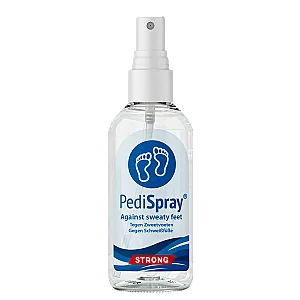
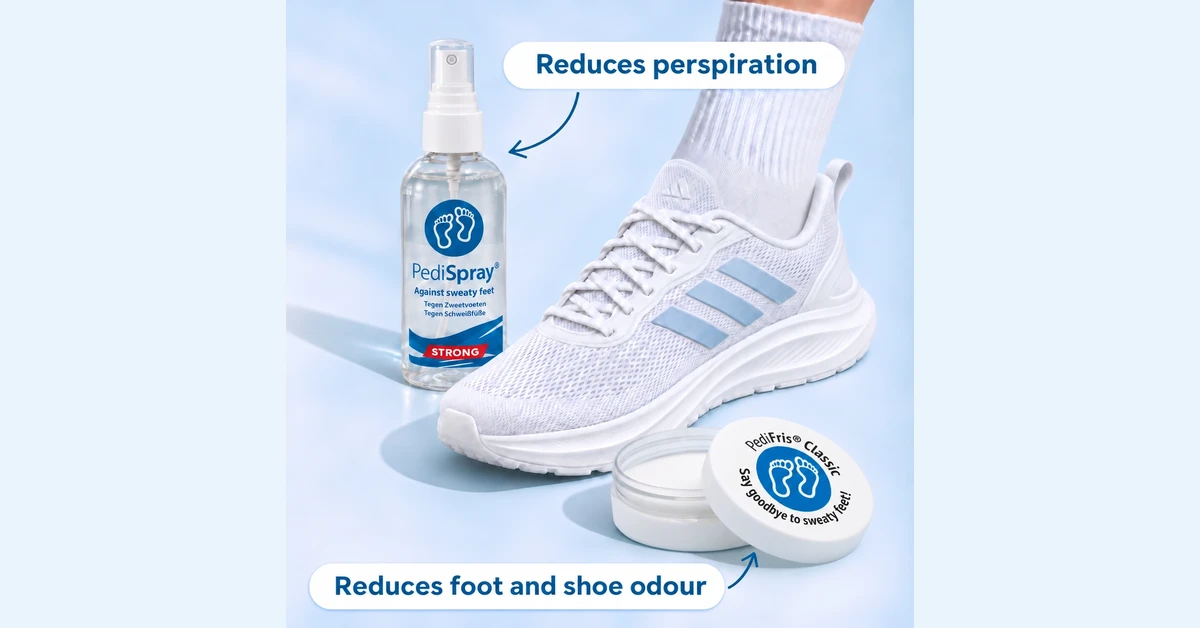
Do your feet get clammy or wet easily? PediSpray® helps to reduce perspiration on the treated skin of the feet. Apply the spray as directed on the label to clean, dry and intact skin.
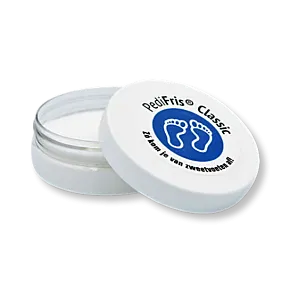
Use PediFris® Classic as directed on the packaging in your shoes to combat foot and shoe odour. Rotate your shoes and allow removable insoles to dry separately.

 Ton
Poppe
john bergman
G
Arnold
Edith
Wjm Gertsen
Anoniem
Dennis Sluimer
 Martina Müller
These reviews relate to the shopping experience and do not constitute evidence of treatment results.
In sweaty feet Excessive moisture on the skin is the main issue. With smelly feet, it is the odour that arises when bacteria break down sweat and skin debris. You can have both conditions at the same time. Does the odour mainly come from your shoes? If so, take a look at the separate explanation about smelly shoes.
Contact your GP if you experience pain, open sores, redness, diabetes or persistent symptoms such as itching and cracks. The latter symptoms may also occur in athlete’s foot Apply.
Practical advice on foot odour, washing, sweating, footwear and when it is advisable to seek medical advice.
Wash and dry your feet thoroughly, wear clean socks every day and change your shoes. If you suffer from excessive sweating, reduce moisture on the skin and also treat any shoes in which the odour lingers.
Washing temporarily removes sweat and skin debris, but bacteria and moisture can remain in socks and shoes. As soon as you wear them again, the foot odour may return.
A consistent routine is most helpful: keep feet clean and dry, reduce excessive sweating on the skin, and treat and allow regularly worn shoes to dry.
Sweaty feet mainly refer to excessive moisture on the skin. Smelly feet refer to the odour caused when bacteria break down sweat and skin debris. These symptoms can occur simultaneously.
Start by washing your feet daily, drying them thoroughly, wearing clean socks and alternating between pairs of shoes. A foot bath is no substitute for this routine. Ask a pharmacist for advice before using home remedies on sensitive or damaged skin.
Contact your GP if you experience pain, open sores, redness, diabetes or persistent symptoms such as itching and cracks. These latter symptoms may also be indicative of athlete’s foot.
Written by Judith de Jong (Content owner, PediFris®). Updated on 5 November 2026. We base our advice on foot care practice and on the medical sources listed below.
Worried about a persistent complaint, fungal nail, athlete’s foot or excessive sweating? Consult your GP, podiatrist or chiropodist.

.svg)